If you’re a publisher who feels like the ground is moving under your feet more than usual, you’re not imagining it.
AI search has been making publishers’ eternal “please let this traffic chart go up” wishes even harder to realize. And it’s almost impossible to figure out what actually moves the needle anymore with online audiences.
Publishers have long attempted to solve such problems on their own. But in the face of mounting odds stacked against them, some publishers are coming around to the idea that collective action may be their best bet for survival.
For this week’s newsletter, we’ll dive deep into the topic of publisher cohorts. It’s a subject that Justin Barton, CEO of AdGrid Media, brought to our attention at an AdMonsters Sell Side Summit a few years back.
As publishers’ problems continued to grow, I wondered if Barton’s publisher cohorts idea was on its way to becoming tangible. Not in the sense of “maybe one day” alliances, but actual collaborations that help publishers drive traffic and monetize smarter.
Enter Content Zebra, a new cohort-style network Barton recently launched that is currently being beta-tested by publishers like EBONY.
I talked to Barton and Gina Perino, head of digital at EBONY, and their perspectives made something clear: Publishers are rethinking collaboration and bringing audience development and monetization closer together than they’ve been in years.
Why Publisher Cohorts Matter
Let’s start with the obvious: Publishers don’t naturally flock together, as Amanda Martin, CRO at Mediavine, discussed in her keynote at Sell Side Summit Austin in November.
While the buy side has mastered the art of forming alliances, holding a unified line in negotiations and sharing best practices, Martin said, the publisher side has room for growth in all those areas.
Barton agreed with that assessment and added that publishers’ competitive tendencies tend to work against them.
“The buy side comes together. They’re cohesive. I think the publisher side sees things as zero-sum,” said Barton.
While publishers compete among themselves, traffic from their platform partners keeps slipping. Meta dials down news? Publishers feel it. Search pushes AI summaries? That hurts, too.
In response to that pain, Barton said, some publishers are trying to optimize their social media presence or strike deals with AI scrapers. But even those measures aren’t driving enough traffic to publisher sites, he said.
Perino shared her own experience with trying to optimize audience growth outside of search. At EBONY, part of weathering the storm has come from tightening the editorial and social relationship. Instead of working in silos, the .com team, social team and editorial leadership are swapping ideas, aligning formats and building intentional traffic drivers. It’s helped, but the broader trend lines are still hard to see.
Meanwhile, Perino said she has lived through enough restructurings and layoffs to see that publishers are locked in a vicious cycle and they need new solutions to break out of it.
Scaling Up Collaboration
For EBONY, Content Zebra has been an encouraging source of shared audience growth.
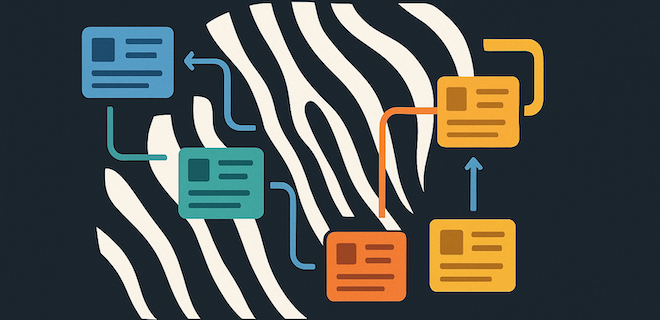
The Content Zebra website acts as a central hub, aggregating stories and articles from all participating publishers into one curated destination. Visitors can browse a diverse menu of content, much like an open news portal.
Content Zebra also places story-sharing ad units directly on publisher sites, moving audiences across the network. This setup helps circulate traffic and visibility while allowing each publisher to benefit from new eyes on their content. Pubs also get to keep the revenue from ad units that are placed on their pages.
At its core, Barton said, this model is about publishers helping publishers without cannibalizing each other’s revenue or giving walled garden platforms more power over content distribution and discovery.
Here’s how it works in practice. Publishers provide Content Zebra with RSS feeds that include their strongest headlines, images and stories. Content Zebra then packages that content into high-impact ad units that live in premium real estate rather than forgotten corners of the page. Typically, these ad units are 970×250 or 300×600 banners.
When those units load, Content Zebra enters the auction alongside any other programmatic bidder. If it wins an impression at a fixed CPM, often around $3, the hosting publisher gets paid the same way they would for any standard display ad.
Inside those ad units, readers see curated headlines from other publishers in the Content Zebra cohort, and when they click on a piece of content, they land directly on that featured publisher’s site. There’s no recirculation loop or traffic detours. The publisher that sold the ad unit keeps the revenue, while the publisher featured in the ad gets real, engaged traffic.
Perino’s hands-on experience backs that up. EBONY’s strongest stories are promoted across the cohort in these Content Zebra-powered units, and the EBONY team can adjust which stories run, test headlines and thumbnails and tweak messaging based on performance.
Plus, because publishers are being paid to promote other sites, it helps offset their own distribution costs, including on other native content platforms where publishers pay to have their content featured.
For EBONY, Content Zebra has become a supplemental traffic source. It’s not a replacement for paid campaigns or partner buys, Perino said, but a controlled, transparent way to bring new readers to the site.
And EBONY hasn’t seen any drawbacks to participating in the publisher cohort. As Perino put it, “Everything we’ve tested with Justin has worked positively for EBONY.”
Closer Collaboration Across The Board
In addition to helping different publishers work together, Content Zebra is also helping publishers’ internal teams work together more closely than they have before.
Historically, audience teams and monetization teams at publishers barely cross paths, Barton said. “Monetization sits with sales and ad ops. Audience development sits near editorial. They don’t really correspond.”
But Content Zebra forces that conversation. Audience teams choose the stories; revenue teams get paid for hosting the units.
And on the buy side, agencies appreciate the opportunity to work with fewer publisher partners while accessing more reach, according to Barton. Plus, he said, the paperwork is cleaner than it would be working with many different partners.
Of course, that closer collaboration doesn’t magically erase buy-side concerns about media quality or the uneven incentives between the buy and sell sides. Barton noted that publishers trying to scale often face unusually strict scrutiny on media quality when they buy traffic through services like Content Zebra. For example, publishers can be labeled as MFA (Made for Advertising) sites if they combine high on-page ad density with paid traffic sources.
So, to avoid raising the buy side’s MFA flags, publishers that work with Content Zebra should avoid overloading pages shared through the platform with ads.
It also doesn’t completely solve publishers’ instincts to guard their audiences like a dragon protecting its gold. But it’s a step in the right direction toward a fairer ecosystem for publishers and buyers alike.
EBONY’s team is already planning the next phase: custom RSS feeds tailored to different Content Zebra partner sites and tuned to drive shared engagement. Much of this tailoring of the RSS feeds is pretty straightforward: business stories for one audience, celebrity coverage for another. But, Perino said, it’s a level of personalization that traditional syndication networks rarely offer.
Suppose there’s a future where publisher cohorts become the norm rather than the exception. In that case, it might look a lot like what EBONY and Content Zebra are demonstrating right now: a collaboration model that’s measurable, monetizable and mutually beneficial.