January is usually when everyone talks about big goals for the year ahead. But in ad ops, New Year’s resolutions tend to be a little more practical.
Publishers want fewer fires to put out and smarter systems to help them achieve their ad ops and rev ops goals. And maybe less time spent fixing problems that shouldn’t exist in the first place.
Last year, audiences stopped coming to sites as much as they used to due to AI search and chatbots cannibalizing content. Which forced many pubs to pivot to multimedia strategies, if they weren’t already doing so. But, looking ahead to 2026, publishers may face an even steeper uphill battle as new habits around AI search become engrained in consumer behavior.
Such challenges require real change that will set publishers up to thrive in this increasingly shaky ecosystem. So we asked publishers what new initiatives they’re committing to in 2026.
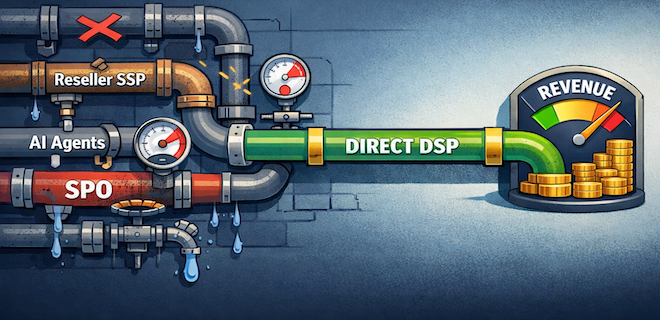
Be More Intentional About the Pipes
U.S. News and World Report is thinking about 2026 through the lens of supply path optimization, said Senior Director of Advertising Monetization Jake Sullivan.
“The goal is to understand where SPO work designed for long-term value can also deliver short-term revenue,” Sullivan said.
One personal resolution Sullivan shared is to do more testing of clear-path configurations—setups that avoid reseller SSPs in favor of direct DSP connections (like The Trade Desk’s OpenPath) or SSPs that are direct-to-DSP. He said he’s focused on working more closely with those direct partners to understand what inventory and signals they actually want.
Sullivan also said he’s staying close to industry initiatives around emerging AI use cases.
For example, he’s following the IAB Tech Lab’s CoMP framework for how AI companies can compensate publishers for scraping their content. He’s also keeping up to date with the Tech Lab’s Agentic RTB Framework (ARTF) as well as the open-source Ad Context Protocol (AdCP), both of which are aimed at enabling AI agents to communicate with each other to complete ad deals. That way, U.S. News can be well-positioned for success if adoption of these industry frameworks takes off, Sullivan said.
But Sullivan isn’t just passively observing these initiatives. He’s advocating for more thoughtful system design to ensure that emerging agentic AI tools avoid the usual pitfalls inherent to digital advertising automation.
“I want to push for thoughtful architecture around AdCP and ARTF, so we don’t build two frameworks in parallel, dedicated to solving some of the same problems, without collaborating or designing those systems to interoperate,” he said.
Make Creative a Strategic Asset
For USA TODAY Co., 2026 is all about pushing creative further upstream in the ad ops process.
USA TODAY is leaning into a unified vision where creative plays a bigger role in campaign performance and client success, said Toni Humphreys, VP of Pre-Media. The company is prioritizing tighter alignment between data-driven processes and integrating campaign design across departments, she said. Humphreys hopes this more integrated approach will help display campaigns deliver measurable impact and a more cohesive brand experience.
Here’s one concrete way Humphreys said this shift in strategic mindset will show up in USA TODAY’s 2026 commitments: The company plans to implement an enhanced creative audit phase for every new advertising partner. Instead of jumping straight into campaign execution, the ad ops team will assess the campaign’s creative upfront and identify opportunities for improvement before a single pixel is moved. In that sense, the publisher is approaching its relationship with advertisers as if it was a creative consultant.
Stop Letting Campaigns Fragment
USA TODAY is also done tolerating disconnected creative.
Humphreys pointed to a familiar problem for publishers: social, email, display, and print campaigns that don’t clearly align with one another from a creative standpoint. Even when each piece performs well on its own, the lack of cohesion can dilute campaign impact and complicate optimization.
USA TODAY’s proposed fix is a cohesive campaign mandate. This year, every project will be developed as an integrated digital ad design that spans social, email, and static formats, with a consistent brand identity baked in from the start, Humphreys said.
This cohesion across departments and media channels won’t just result in cleaner, more consistent ad creative. It also makes campaigns easier for publisher ad ops teams to measure and optimize – especially as teams are expected to juggle more media channels with fewer resources.