Ad Ops Topics: semantic advertising
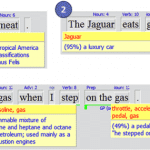
Semantic Advertising is using semantics to give meaning to the content of web page which can then determines the placement of relevant advertising. Semantics goes beyond keyword analysis used in traditional contextual advertising. For example, using semantics would allow an ad to be served based on if a news article using the word "apple" is talking about the fruit or the corporation.
For example, Peer39 is an semantic advertising service provider that uses their own technology to determine meaning and serve the proper ads.
Semantic ad technologies may or may not utilize the "Semantic Web" - which is an effort being lead by the World Wide Web Consortium - W3C to develop a common framework for data to allow machines to understand meaning and exchange information based on that relation.
Blog Posts
Jun 7, 2011
Every day worldwide people are inundated by an ever-increasing amount of information. And the problem grows worse each year. An April 2011 survey of 200 respondents conducted by Magnify.net pulled back the curtain on our digital lives. Nearly 50% of respondents reported that they were connected to the internet “from the moment they wake up until the moment they go to sleep”. Seventy-seven percent report reading emails on the evenings and weekends, 33% read emails in the middle...
Oct 13, 2010
The Semantic Web is a visionary concept which has been gaining traction over the last decade. According to the World Wide Web Consortium (W3C), an international community with a stated mission to lead the web to its full potential, the semantic web provides a common framework that allows data to be shared and reused across application, enterprise, and community boundaries. So how does that relate to advertising? Well, in the sense that the semantic web provides a framework for sharing data...
Jul 6, 2010
Watch Professor David Crystal's keynote presentation from the EU Publisher Forum in Barcelona, Spain:
Professor David Crystal is a prolific writer, editor, lecturer and broadcaster who divides his time between work on language and on internet applications. His recent publications include Language and the Internet (2006) and Txtng the Gr8 Db8 (2008) and he also consults to ad pepper media which acquired Crystal Reference Systems, the company he chaired from 2001 to 2006.
An accomplished and...
Nov 1, 2009
We’re all familiar with content tagging; it’s a way to categorize content based on the topics it relates to. For example, this post uses tags such as semantic web, content, content tagging, metadata, ontology, semantic tagging. Using tags in this basic way helps optimize your site for search engines and gives users an idea of what the content is about. Let’s say you were reading this post and you wanted more information about ’semantic tagging.’ Clicking on the content tag ’semantic tagging’ at...
News Articles
May 12, 2011
Feb 4, 2011
Dec 14, 2010
Dec 8, 2010
Nov 17, 2010
Nov 16, 2010
Sep 15, 2010
Jul 29, 2010